Connecting the Dots: How APIs and Automation Platforms Run Your Landscape Business on Autopilot

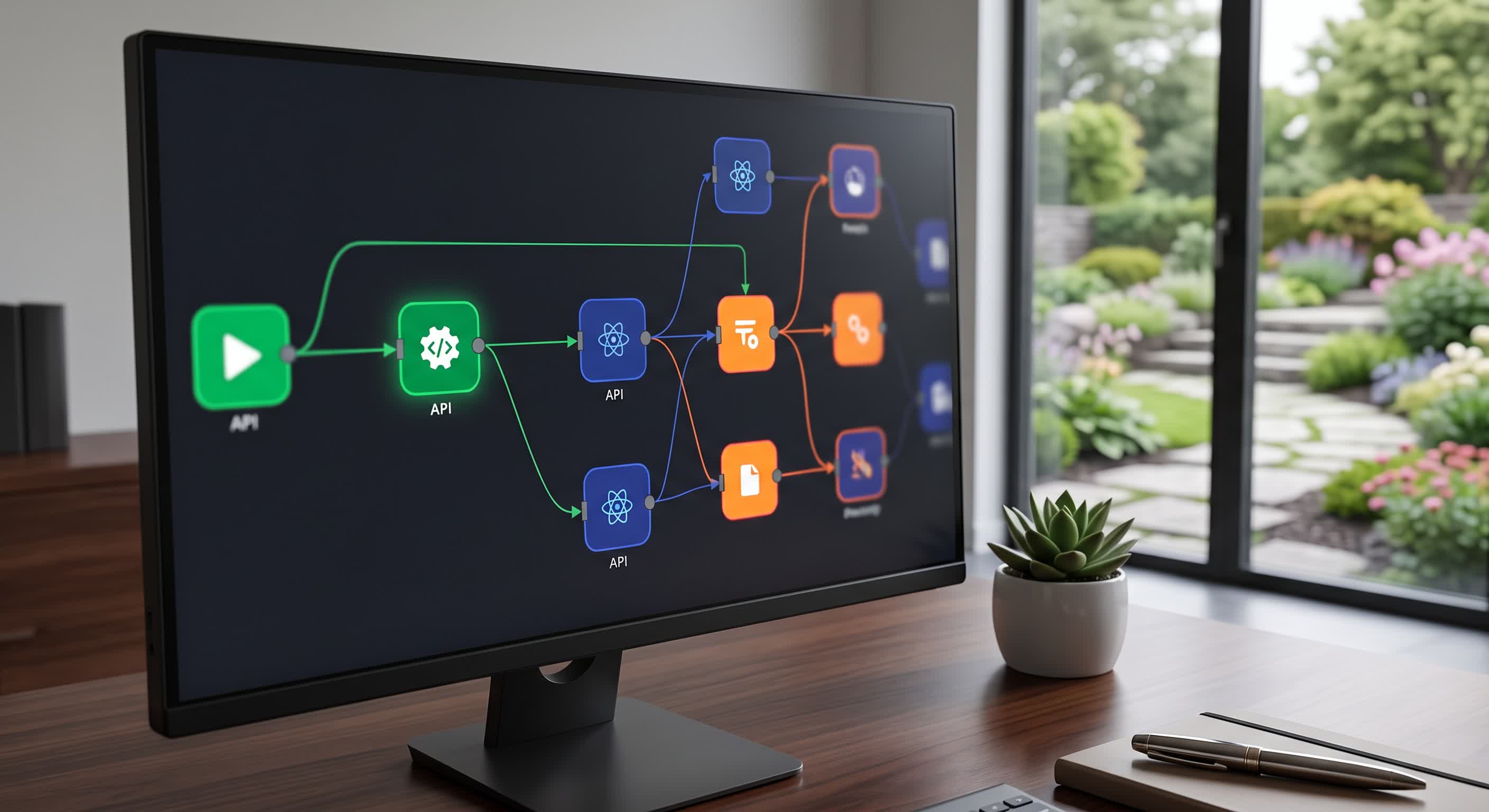
Every growing landscape company relies on a stack of software tools to keep operations moving. You likely use Aspire for estimating and job costing, Azuga for fleet tracking, QuickBooks for accounting, and Microsoft Teams or WhatsApp for crew communication.
The problem? Most of these tools don't talk to each other out of the box.
Your back-office team ends up acting as human middleware—manually copying data between screens, updating spreadsheets, or emailing account managers when something goes wrong.
This is where APIs and iPaaS platforms (Integration Platform as a Service) come in. By connecting your software stack behind the scenes, you can automate communication, eliminate redundant data entry, and let your systems handle the heavy lifting.
What is an API, Really?
API stands for Application Programming Interface. Think of an API as a secure digital waiter.
When you sit at a restaurant, you don't walk into the kitchen to cook your meal—you give your order to the waiter, who takes it to the kitchen and brings back your food. An API does the exact same thing for software. It allows Aspire to request information from another system, or allows your accounting software to send financial updates back to your CRM without human intervention.
While APIs are the bridges between software, you need an engine to run traffic across them. Here are the top three platforms landscape operators use:
- Zapier: A beginner-friendly, web-based platform using simple "If This, Then That" logic. It’s fast to set up for basic tasks, though costs scale up quickly as your task volume grows.
- n8n: A powerful, node-based automation platform. It offers advanced data mapping and complex conditional logic, and can be self-hosted to run unlimited automations without per-task fees.
- Microsoft Power Automate: Built directly into the Microsoft ecosystem. It is great for internal Office 365 workflows, but keep in mind: connecting to external APIs via HTTP requests or custom endpoints requires a Premium license upgrade ($15/user/month or pay-as-you-go tiers), which can increase costs as you expand outside Microsoft's core app suite.
3 Real-World API Automations for Landscape Operators
Connecting your systems via APIs changes how your business executes on a daily basis: