Stop Chasing Revenue: How High Gross Margins Build Real Wealth for Landscape Contractors


In the green industry, top-line revenue is the ultimate vanity metric. At trade shows and association roundtables, contractors love to brag about their numbers: "We hit $2 Million this year," or "We're rolling out five new maintenance crews this spring."
But top-line revenue doesn't pay your mortgage, buy new trucks, or fund your retirement. Net profit dollars do.
Many landscape contractors fall into the trap of believing that scaling top-line revenue is the cure for thin cash flow. In reality, scaling a business built on weak margins only accelerates operational chaos. If you want to build a sustainable, resilient landscape company, it’s time to stop chasing top-line volume and start optimizing for gross and net margin.
1. The "Top-Line" Illusion
Top-line revenue exists for one primary reason: to generate gross profit dollars that absorb your fixed overhead expenses. Once overhead is covered, every remaining dollar hits your net bottom line.
When you chase top-line revenue simply for the sake of size, you are usually forced to take on low-margin work—underpriced commercial maintenance accounts, low-bid residential mowing, or high-risk construction jobs.
Scaling low-margin revenue does not fix a broken business model; it merely multiplies your exposure:
- More Trucks & Equipment: Higher capital expenditure, maintenance costs, and debt service.
- More Labor Headaches: Broader liability, higher turnover, and increased recruiting drag.
- More Risk: Greater exposure to property damage, warranty callbacks, and safety liabilities.
Adding $500,000 in revenue at a 2% net margin yields a measly $10,000 in profit—while increasing your operational stress.
2. The Overhead Threshold
To understand why margin trumps revenue, you must understand your Overhead Threshold.
Every landscape business carries fixed overhead—office staff salaries, rent, software licenses (like Aspire or QuickBooks), insurance, and shop utilities. These costs remain relatively static regardless of whether you run three crews or four.
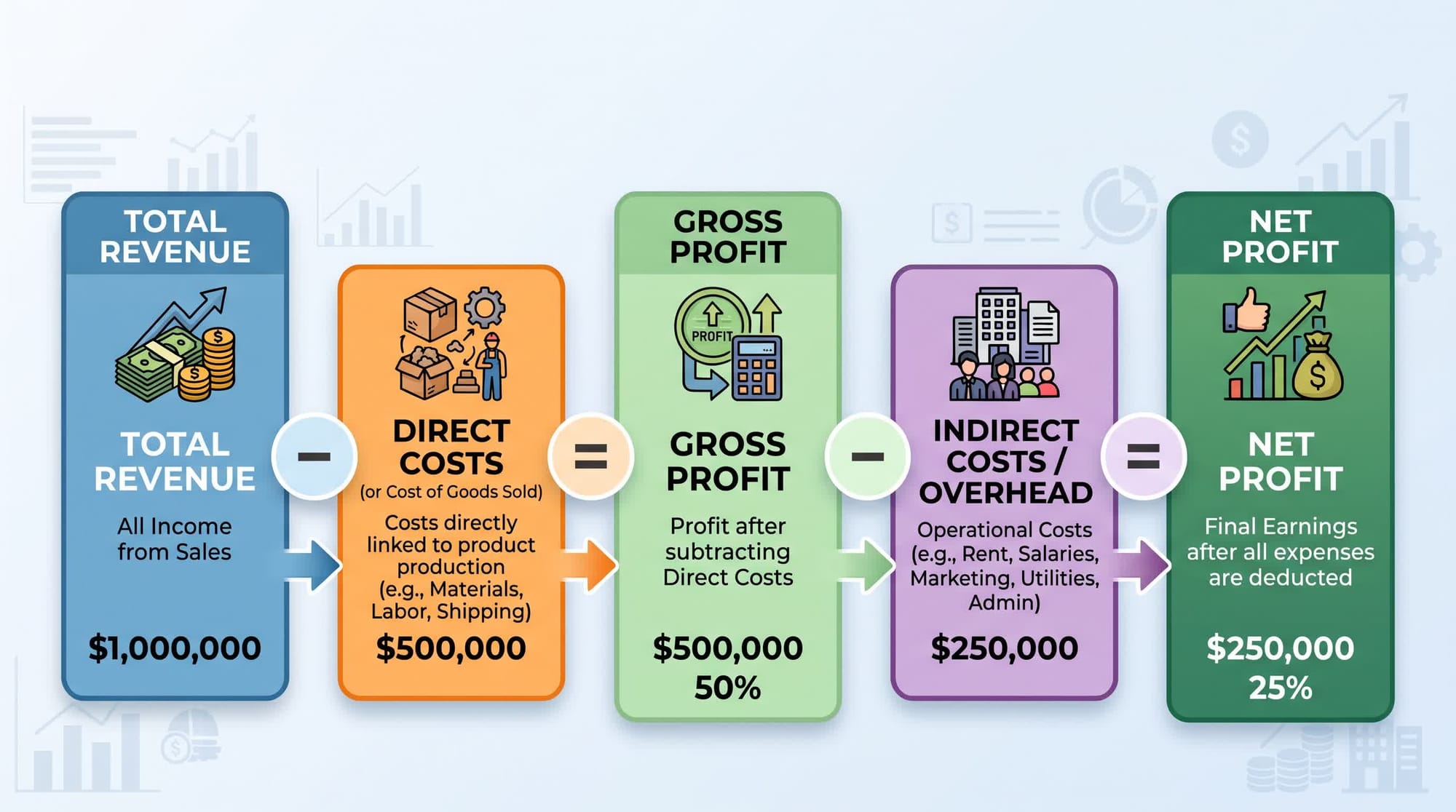
Your Gross Margin (Revenue minus Cost of Goods Sold) is the engine that pays for that fixed overhead.
Once your total gross profit dollars cross the threshold required to cover 100% of your fixed overhead, your net profit margin explodes. From that point forward, high gross profit margins on incremental work send massive net profit straight to the bank. Conversely, if your gross margins are thin, you have to run an immense amount of top-line volume just to pay for the shop.