The End of Trenching? How WireVirus and the 4 Shooter Are Changing Zone Expansion

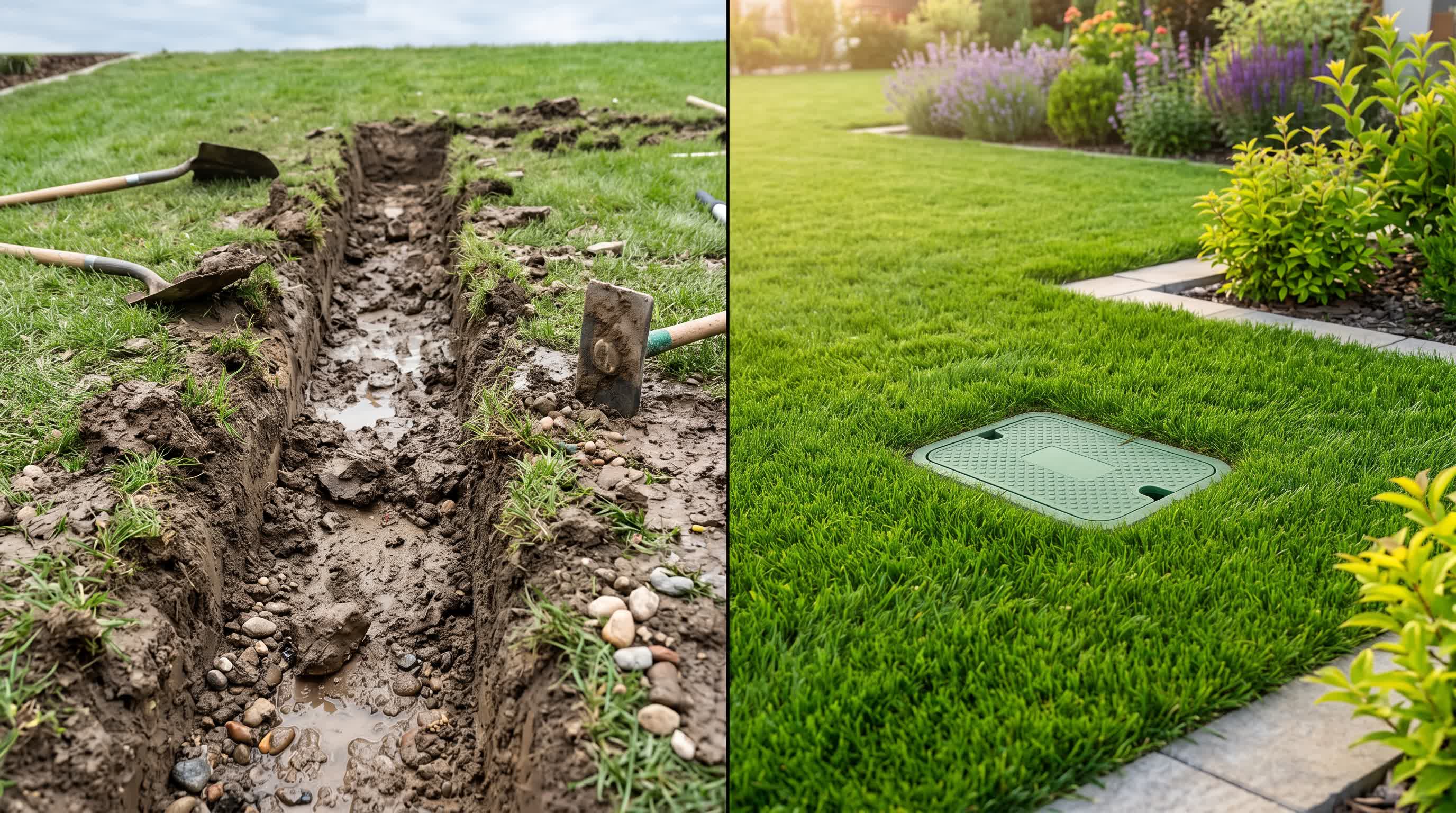
Back when I started my irrigation career, I didn't care for Add-a-Zone modules. It just felt like a band-aid rather than the "right way" to fix a wiring issue or install a new valve.
In those days—if this tells you how long ago that was—you had to double the original station's run time, and half of it would be attributed to the new station. Programming wasn't intuitive or "fair." If you had a bed zone and a turf zone paired together, one was guaranteed to end up drowned or the other bone-dry.
As time went on, I grew—like most irrigators—to learn that these modules do have a place in a tech's toolkit, especially once newer versions allowed zones to be programmed independently. Even then, I'll admit I wasn't in love with them. But in situations where a module saves hours of trenching labor or where trenching through concrete or roots isn't an option, they can be a total lifesaver.
Enter the WireVirus
About 18 months ago, I became aware of the WireVirus. By that time, I was working mostly behind a desk, but my repair technicians instantly loved these things.
What makes them a game-changer for field techs?
- Compact size: Pocket-sized design that's easier to handle and install in cramped valve boxes.
- No common wire required: Eliminates extra connection headaches at the module level.
- Fully waterproof: No external grease nuts required.
- Interchangeable modules: No need to keep track of dedicated transmitter vs. receiver units.
- Cost-effective: Significantly lower price point than legacy options.
The 4 Shooter: 16 Zones on 1 Wire?
Last week at the annual Texas Nursery & Landscape Association (TNLA) Expo, I was introduced to their latest invention: the 4 Shooter.
This new module allows techs to add up to 4 zones from a single field wire. What's crazier? These modules can be "daisy-chained" together to run up to 16 independent zones from one field wire.
I don't know how they pulled it off technically, but they did. I love seeing new technology that illustrates the incredible ingenuity and innovation our industry has to offer.
The Operational Bottom Line: Protecting Labor Margins
Beyond the cool tech factor, tools like this address one of the biggest headaches in green industry operations today: labor scarcity and rising hourly costs.
Trenching under hardscapes or across established turf isn't just hard on your crews—it’s an efficiency killer. Saving 3 to 4 hours of digging per zone expansion directly protects your gross profit margins, keeps your job schedules on track, and frees up your technicians to complete more billable service calls in a day. Modernizing your field SOPs around smart hardware is where true operational scaling happens.
I haven't had the pleasure of installing the 4 Shooter in the field yet—their rep mentioned it was just starting to stock across regular supply houses (SiteOne, Horizon, Irrigation Station, Ewing, etc.).
Have you had the opportunity to try the 4 Shooter yet? Or what’s your go-to play when you hit a broken wire path under hardscape? Drop a comment below and let’s discuss!